Black Tie Dress Code for Women: What to Wear and What to Avoid
What black tie really asks for, how long the dress has to be, which fabrics and colours work, and where trousers, gloves and short dresses stand.
Black tie is the most formal dress code most people will ever be invited to. White tie sits above it, but outside state banquets and a handful of balls it has almost disappeared. For men, black tie is a uniform: a dinner jacket, a bow tie, done. For women there is no uniform, and that is exactly why the two words on an invitation cause so much doubt. The short answer is a floor-length dress in an evening fabric. The rest of this guide covers the edges: how short is too short, whether trousers count, and what changes when the invitation says optional.
What black tie actually asks for
The two reference points for etiquette in English agree on the centre and differ slightly at the margins. The Emily Post Institute lists three options for women under black tie: a formal floor-length evening gown, a dressy cocktail dress, or what it calls your dressiest little black dress. Debrett's, the British authority, puts it in one line: women should wear an evening dress or skirt, and long, or at least not very short, is usually best.
Read together, they say the same thing. Long is the expected choice. A shorter dress is tolerated when everything else about it is clearly evening wear. If you do not know the hosts or the crowd, a long dress removes the question completely, which is why it remains the default advice.
Where the dress code comes from
Black tie began as the relaxed option. In 1865 the Prince of Wales, later Edward VII, ordered a short midnight blue silk smoking jacket from the Savile Row tailors Henry Poole and Co. to wear at Sandringham, the royal family's informal country house. The tailless jacket crossed the Atlantic, and in October 1886 it appeared at the first Autumn Ball of the Tuxedo Park club in New York State, which is where the American word tuxedo comes from. After the First World War the dinner jacket became the standard for evening, and the tailcoat was kept for the most ceremonial occasions.
Two things from that history still shape what women wear. Black tie is evening dress, traditionally worn only after six o'clock, or after sundown in winter, so the fabrics and colours are the ones that look right in artificial light. And for women the code has always followed the evening fashion of the day rather than a fixed garment. Earlier generations wore dinner dresses to the ankle or mid-calf with wraps and gloves. Today the range runs from ball gowns to sleek columns, which is why judgement matters more than a rule.
Length: long, midi or short
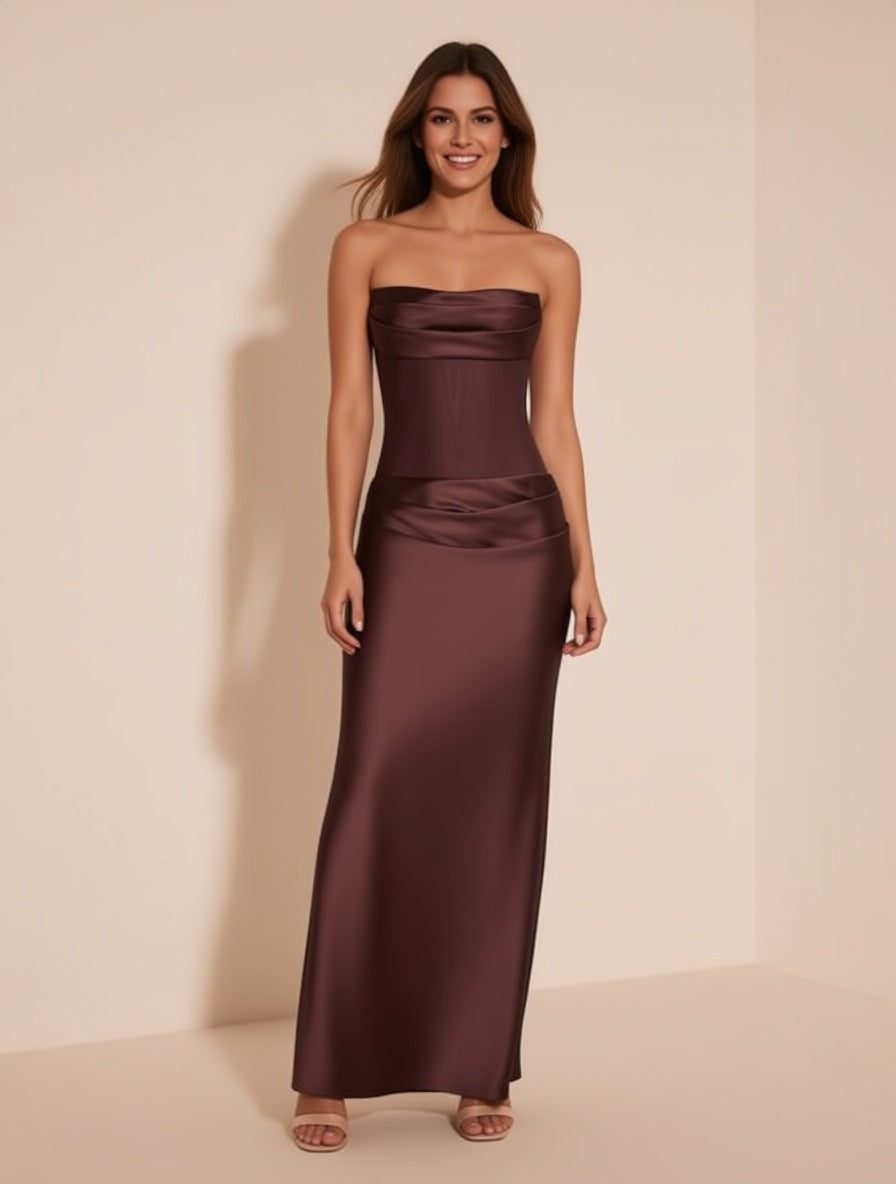
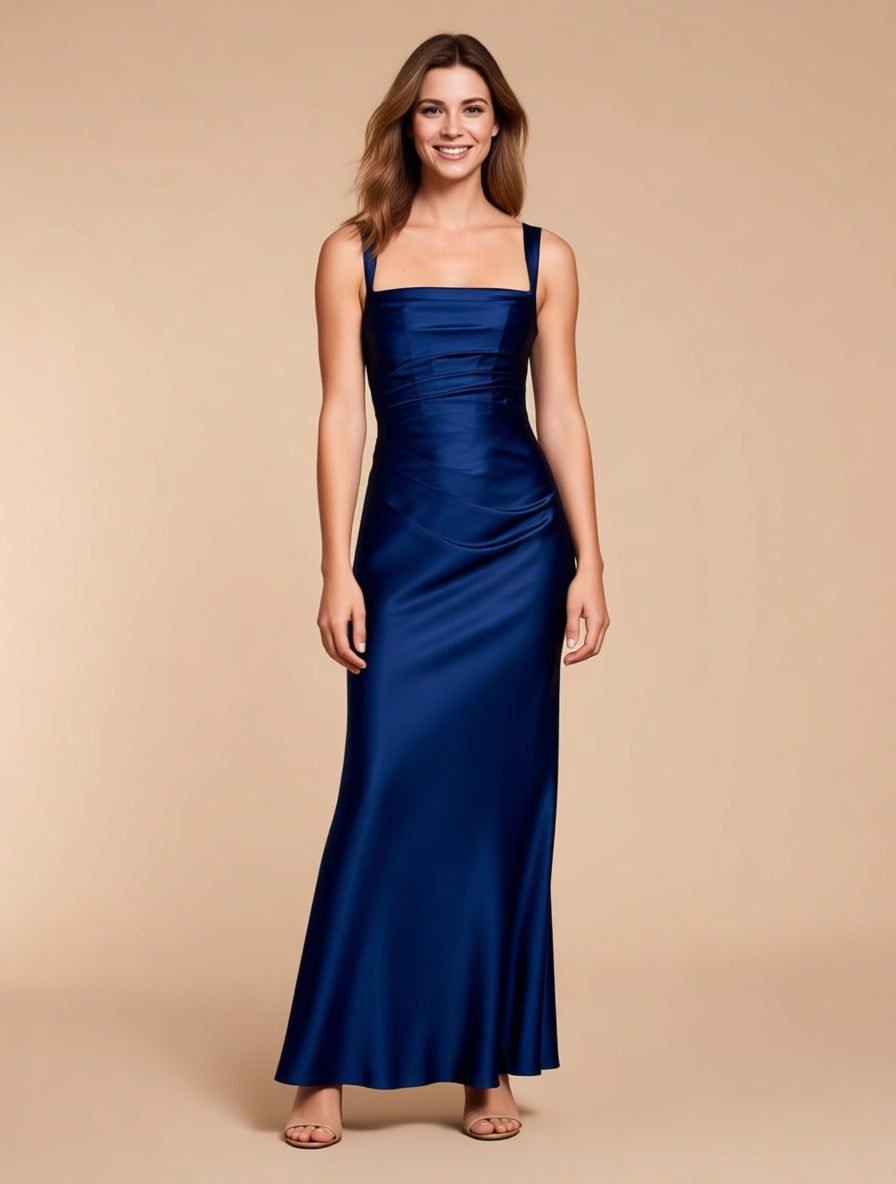
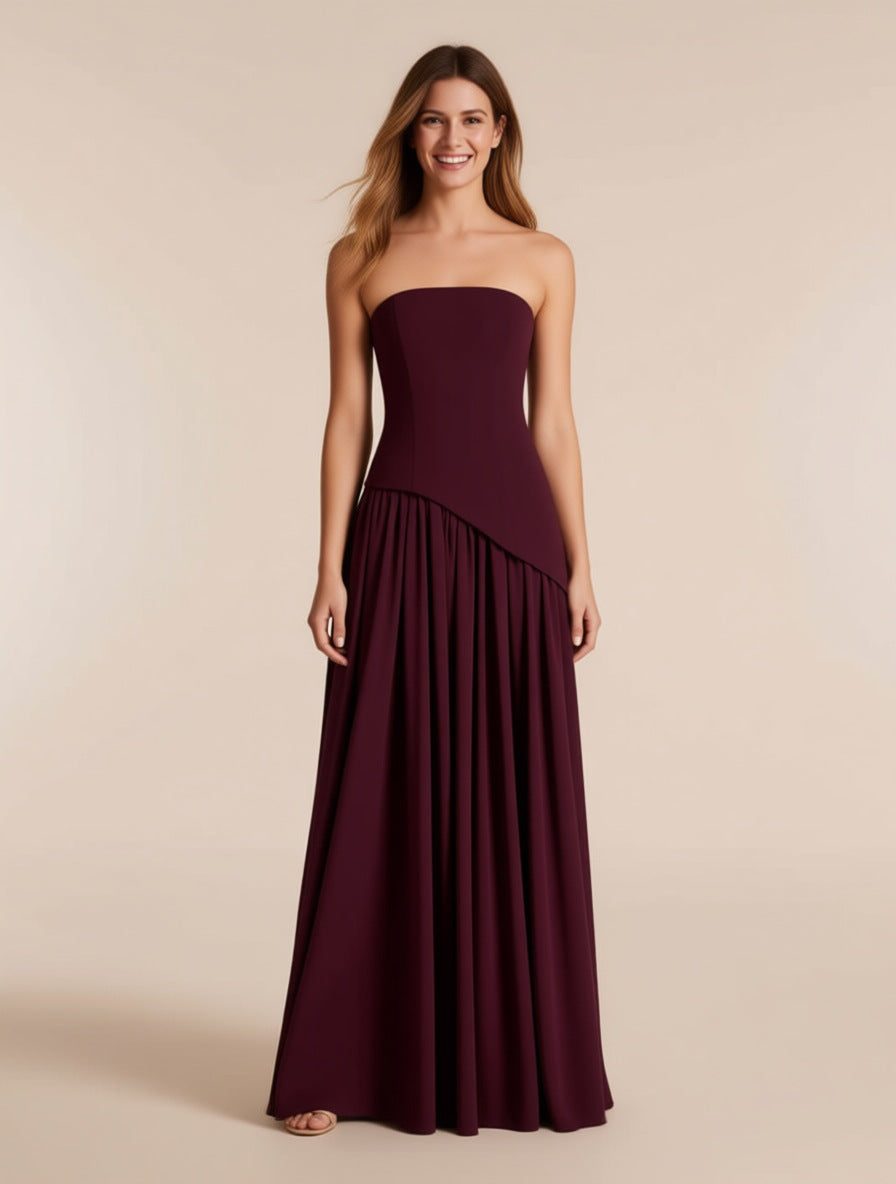
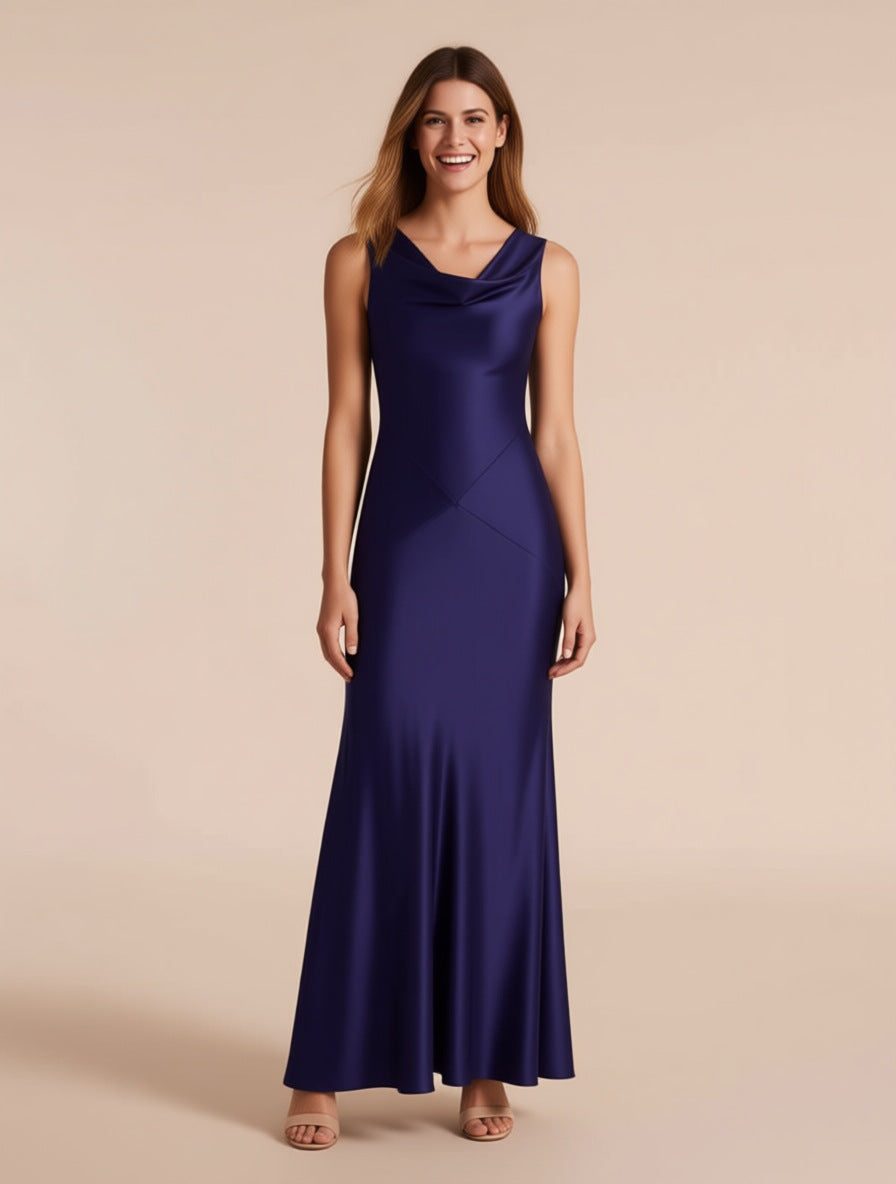
A dress that reaches the floor or the ankle is the standard and is correct at every black tie event. The alternative Debrett's describes is narrow: a cocktail dress that is fitted and falls very slightly below the knee. That gives a practical floor. At the knee or just below it, in the right fabric, a dress can still pass. Above the knee it reads as a party dress, however expensive it is.
A midi sits between the two and works when the fabric and the cut carry the formality: a satin or crepe dress with a defined shape, worn with heels and real jewellery. A soft, printed midi that you would also wear to lunch does not.
Debrett's adds a point that most guides skip. A formal dinner and a dinner dance are different evenings. A very full skirt is impractical when you are seated at a table for three hours, and a very tight red carpet dress, or one with a dramatic split, can be uncomfortable or out of place at an event that includes both a reception and a sit-down dinner. Before choosing, ask what the evening involves. If you will sit for most of it, pick something you can sit in. If there is dancing, pick a skirt that moves.
Fabric does most of the work
Fabric signals formality faster than cut. Debrett's names silk, crepe and chiffon as fabrics suited to evening, and satin, velvet and lace belong to the same family. Cotton, linen and jersey look like daytime whatever shape they are sewn into.
This is the easiest way to judge a dress you already own. A plain crepe column with no decoration at all looks more black tie than a short dress covered in sequins. If a dress does sparkle, let it be the only thing that does, and keep the jewellery quiet.
Colour: it does not have to be black
Debrett's is direct about the name of the dress code: dresses need not be black, and wearing black does not by itself guarantee the right level of formality. A black cotton sundress is not black tie. An emerald silk gown is.
Black is still the easy classic. Deep colours such as navy, burgundy, emerald and chocolate brown are just as formal and tend to look better in photographs than black does. Pale shades and metallics work too. The one firm exception is a wedding, where white, ivory and anything that could be mistaken for a bridal dress is left to the bride.
Trousers, suits and separates
Trousers are no longer excluded, but the guides are careful about them. Debrett's accepts evening trousers and recommends a palazzo cut rather than a tight fit, with a flowing tunic top over trousers for events at the less formal end. The Emily Post Institute lists dressy separates only under black tie optional, not under black tie itself.
In practice, wide-leg trousers in satin or crepe with a formal top, or a tuxedo suit cut for evening, will be right at most black tie events. For a very traditional host, or a wedding where you do not know the families, a dress is the safer reading of the invitation.
Jewellery, gloves, bags and shoes
Jewellery can be fine or costume. Debrett's allows both and draws one line: no tiaras, which belong to white tie. Match the jewellery to the neckline rather than wearing everything at once. A high neck takes earrings, an open neckline takes a necklace.
Gloves are not part of black tie. The Emily Post Institute mentions long gloves only under white tie, and even there marks them as optional. The bag should be small, an evening clutch in silk or satin rather than the bag you carry by day, and shoes are evening sandals or pumps. Debrett's still specifies tights, black or sheer, a rule many guests now ignore in warm weather.
The detail most often forgotten is the coat. Debrett's asks for an evening coat, cloak, pashmina or wrap in a suitable fabric. Arriving in a padded everyday jacket undoes a careful outfit at the door, so plan what goes over the dress when you plan the dress.
Black tie optional, creative black tie and white tie
Black tie optional widens the choice without lowering the tone. The Emily Post Institute adds dressy separates and a simpler little black dress to the list, next to the floor-length gown and the dressy cocktail dress. A long dress is still the best answer. An elegant midi, a formal jumpsuit or an evening suit are all within the code.
Creative black tie keeps the same formality and invites personality. The Emily Post list is identical to black tie with one addition: fun or unique accessories. Think of an unexpected colour, a bold shoe or a statement earring on a properly formal dress, not a costume.
White tie is the strict one. Both guides require a full-length formal evening dress. Debrett's is blunt: shorter dresses or trousers, no matter how smart, are not acceptable. It is also the only dress code where a tiara is correct. If you wear long gloves, Debrett's gives the etiquette: keep them on when arriving, in a receiving line, when shaking hands and when dancing, and take them off to eat, even for a canape.
The mistakes that are easy to avoid
Most black tie mistakes come from five things. The dress is too short. The fabric belongs to daytime. The guest assumed that black was enough. The dress looks wonderful standing and cannot be sat in. Or there is too much happening at once: a deep neckline, an open back and a high slit on the same dress. One focus is elegant. Three look like a different kind of party.
A quick way to decide
Start with length and go long unless you have a reason not to. Check that the fabric is an evening fabric. Choose any colour except white at a wedding. Sit down in the dress, walk in the shoes, and decide what you will wear over it on the way there. If you are still caught between two options, take the more formal one. As Debrett's puts it, it is always more polite to the host to dress up.
| Dress code | Standard choice | Also accepted | Not accepted | |
|---|---|---|---|---|
| White tie | Full-length formal evening dress or ball gown | Long gloves (optional), tiara, the finest jewellery | Shorter dresses and trousers | |
| Black tie | Floor-length evening dress | Dressy cocktail dress to just below the knee, evening trousers in a palazzo cut | Tiaras, daytime fabrics, very short dresses | |
| Black tie optional | Floor-length evening dress | Dressy cocktail dress, little black dress, dressy separates | Daywear | |
| Creative black tie | Floor-length evening dress or dressy cocktail dress | Fun or unique accessories | Costume in place of formal dress |
Shop the look