Wedding Guest Dress Codes Explained: What to Wear to Every Kind of Wedding
White tie, black tie, formal, cocktail, semi-formal, festive, casual and beach: what each dress code on a wedding invitation means, and what to do when there is none.
A wedding invitation usually tells you what to wear in two or three words. Those words have fairly settled meanings, and once you know them, choosing a dress becomes a short decision instead of a long one. This guide goes through each dress code in order of formality, then covers the cases an invitation does not spell out: no dress code at all, a daytime ceremony, a religious service, a beach.
Start with the invitation, then the clock
The Emily Post Institute gives the simplest rule: the wedding invitation and the time of the wedding are your best guide to its formality. An engraved invitation to a six o'clock ceremony in a hotel ballroom is asking for something different from a printed card for a two o'clock ceremony in a garden, even if neither mentions clothes.
Evening is more formal than day, and indoors is more formal than outdoors. Most couples now have a wedding website, and that is the first place to look when the invitation is silent. If it says nothing either, it is perfectly polite to ask the couple or someone in the wedding party.
White tie
The rarest and strictest code. It requires a full-length formal evening dress. Debrett's states plainly that shorter dresses or trousers, no matter how smart, are not acceptable. Long gloves are optional according to the Emily Post Institute, and this is the one occasion where the grandest jewellery is expected. Very few weddings ask for it. If yours does, there is no room for interpretation.
Black tie
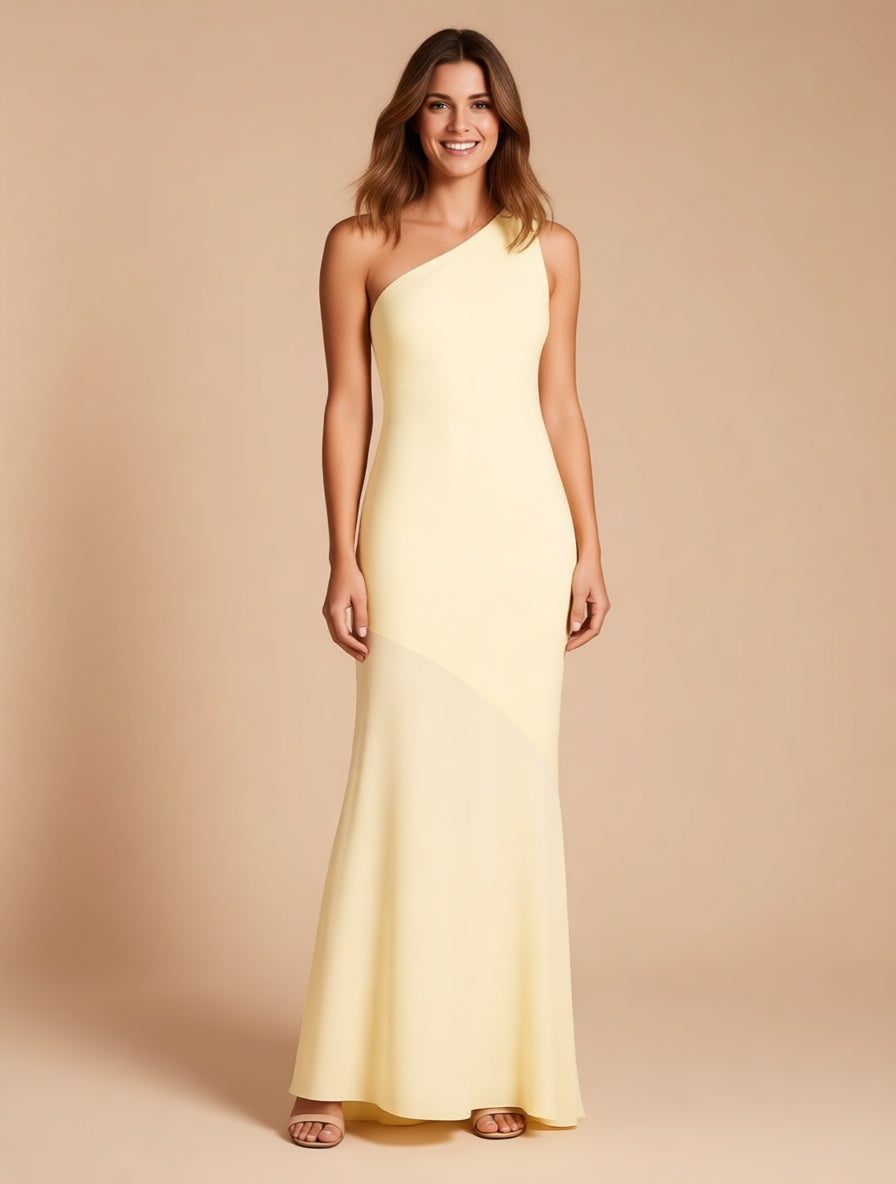
The most formal code you are likely to see. A floor-length dress in an evening fabric such as silk, satin, crepe or chiffon is the standard. The Emily Post Institute also lists a dressy cocktail dress, and Debrett's allows a fitted dress that falls just below the knee, but at a wedding the long dress is the safer choice. Deep colours and jewel tones are the classic answer. Our full black tie guide covers lengths, fabrics and trousers in detail.
Formal or black tie optional
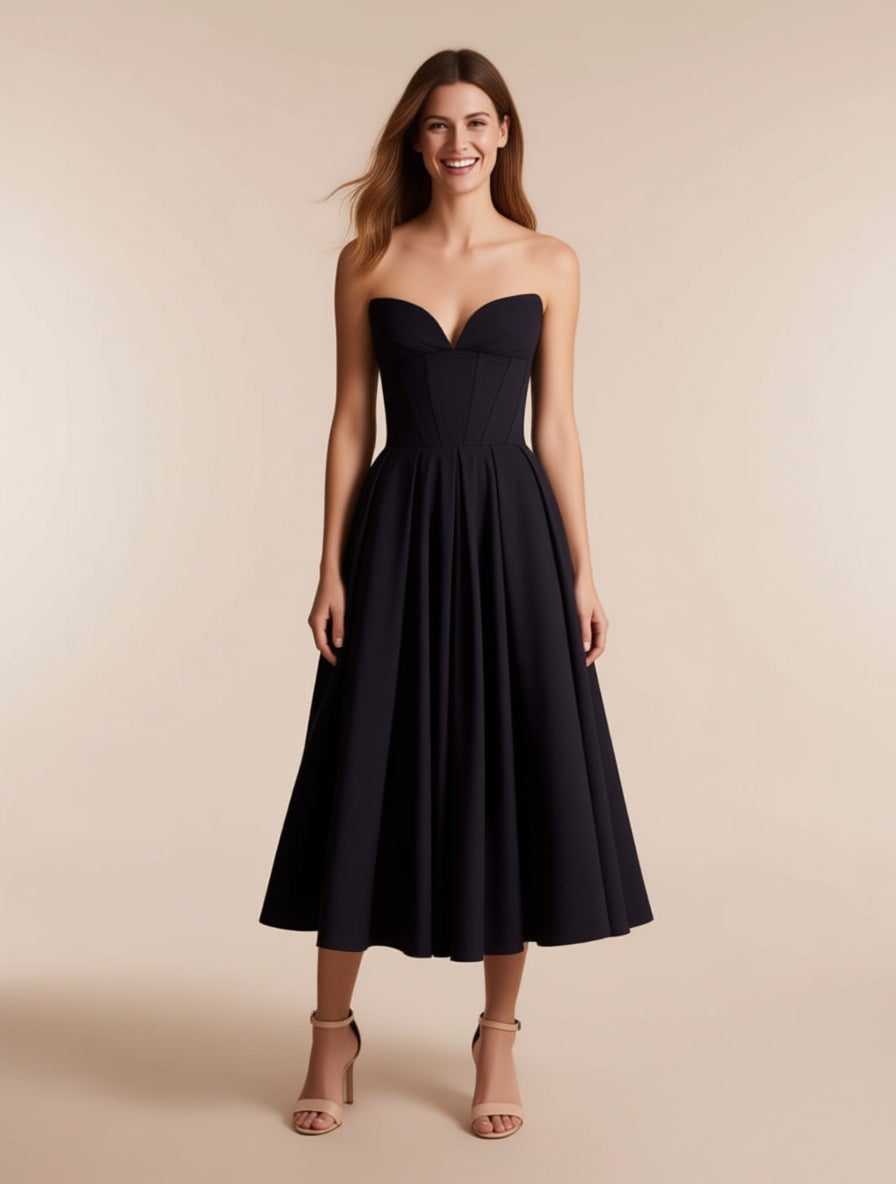
Still dressy, with more freedom. The Emily Post list for black tie optional is a floor-length gown, a dressy cocktail dress, a little black dress or dressy separates. In practice this is where a satin slip dress, a corseted maxi, an elegant midi or a formal jumpsuit all work. If you are unsure which way the crowd will go, choose long.
Cocktail and semi-formal
This is the dress code most weddings use. For semi-formal, the Emily Post Institute lists a short afternoon or cocktail dress, a little black dress, a long dressy skirt and top, or dressy separates. The Debrett's equivalent is the lounge suit dress code, where it suggests a smart or cocktail dress for the evening and a day dress, trouser suit, or skirt and jacket for daytime.
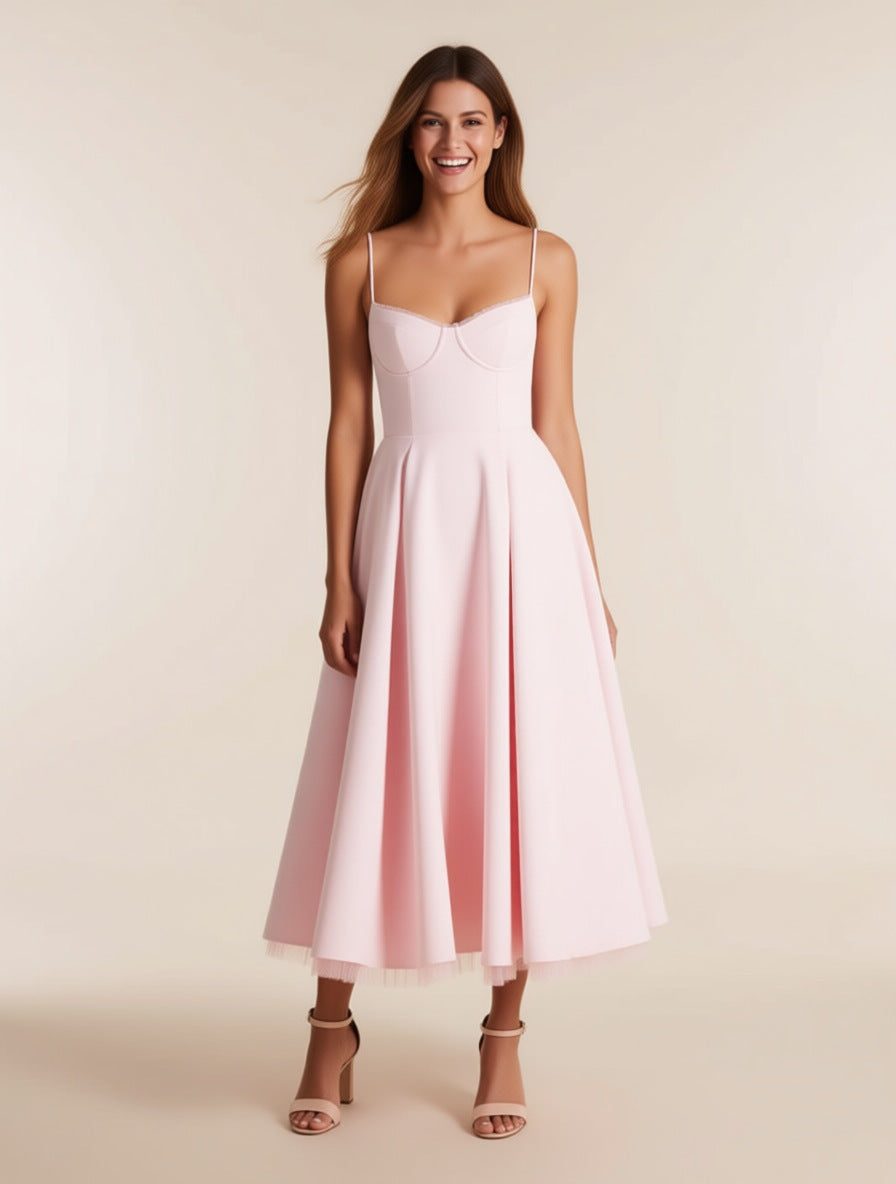
The useful range is knee-length to midi, in a fabric with some structure or sheen, so that the dress is clearly dressed up: a fitted midi, a fit-and-flare, a slip dress with a jacket. Heels or smart flats and a small bag finish it. What separates cocktail from casual is not the length but the fabric and the finish.
Festive
A newer code, used for winter and holiday weddings. The Emily Post Institute treats it as cocktail with permission to play: a cocktail dress, a long dressy skirt and top, or a dressy trouser outfit, with seasonal colour. Read it as cocktail formality plus one cheerful element, such as colour, sparkle or texture, rather than as a theme to dress up for.
Dressy casual and casual
Dressy casual is the code that causes the most mistakes, because the second word is louder than the first. The Emily Post list is a dress, a skirt and dressy top, or a dressy trouser outfit. It also lists nice jeans with a dressy top, but for a wedding leave denim out unless the couple says otherwise. Debrett's advice for smart casual is that a smart day dress worn with a jacket is a safe choice, and that denim should be avoided unless it is immaculate.
For a fully casual wedding, a sundress or a simple midi in a good fabric is right. Casual on a wedding invitation describes the mood of the day. It is not an invitation to dress as you would for errands.
Beach, garden and destination weddings
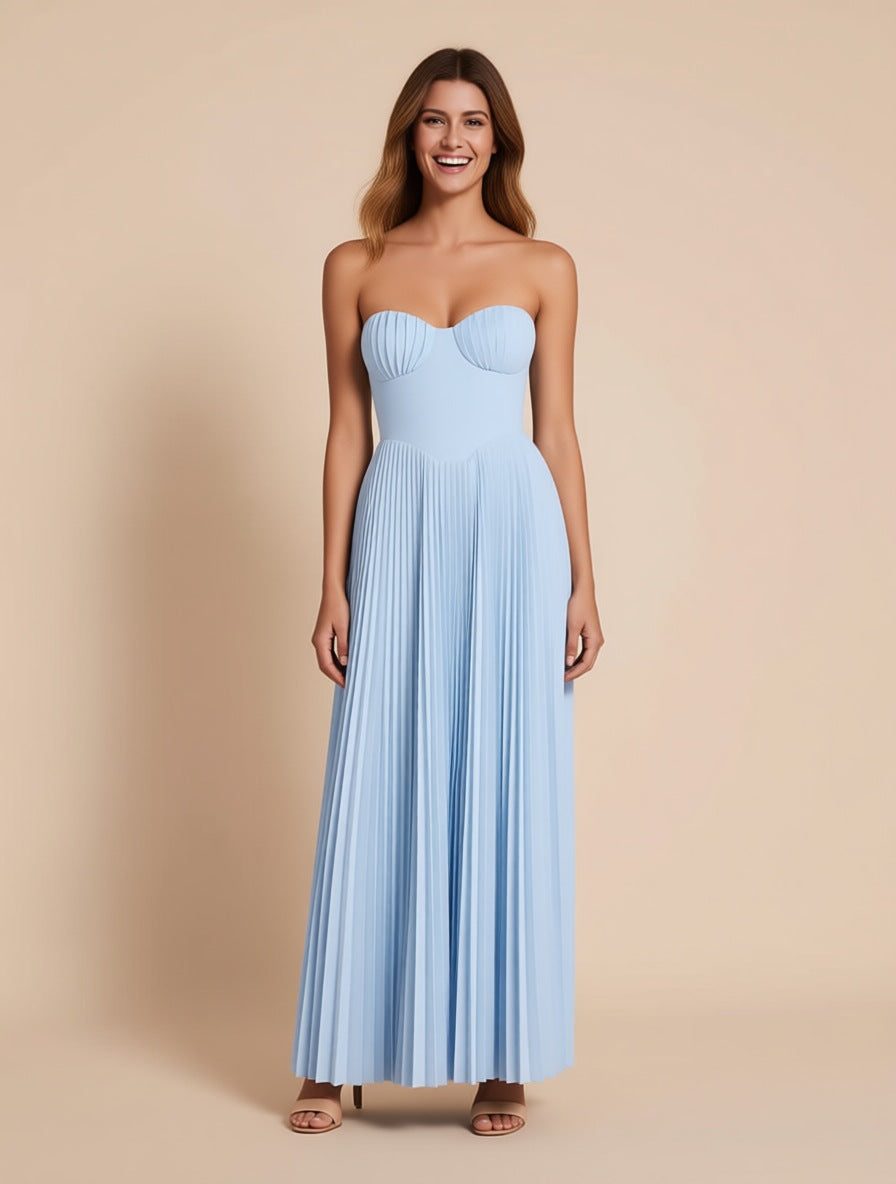
Here the venue matters as much as the code. Think about heat, wind and the ground you will stand on. Flowing fabrics such as georgette, chiffon and cotton, in a midi or maxi length, cope with heat and movement. A very full or very light skirt can be difficult in a sea breeze, so check how the dress behaves when you walk.
Shoes need the most thought. Stilettos sink into grass and sand. Block heels, wedges or flat sandals are the practical choice, and for a ceremony on the sand itself, many guests go flat. Bring something for the evening, when the temperature drops.
Daytime or evening
The same level of formality looks different at different hours, and the Emily Post Institute's wedding guidance is built around that. For a formal daytime wedding it suggests a cocktail dress or a dressy afternoon dress. For a formal evening wedding, a long evening dress or a dressy cocktail dress, depending on local custom. For a semi-formal daytime wedding, a dressy afternoon dress, a suit or a trouser suit, and for the evening version, a cocktail dress.
The pattern is easy to remember. Daytime means lighter colours, softer fabrics and prints. Evening means darker, sleeker and longer. A dress that is right at two in the afternoon can look underdressed at eight, and the reverse is also true.
Religious and cultural ceremonies
Before you choose, the Emily Post Institute suggests asking two questions. Does the religion or culture of the couple call for a head covering? And would bare shoulders and arms, or open-toed shoes, be out of place at the ceremony?
The easy solution is a layer. A wrap, shawl or jacket covers the shoulders for the service and comes off at the reception. If the wedding follows traditions you do not know, the couple's website usually explains what is expected, and guests who ask are appreciated, not judged.
The rules that apply everywhere
Do not wear white, ivory or cream, or anything that could be read as bridal. Avoid anything very revealing at the ceremony. Do not dress to outshine the couple. And when you are caught between two levels, go up. Debrett's puts it in one sentence: it is always more polite to the host to dress up. Nobody remembers the guest who was slightly too elegant.
A practical last check
Weddings are long. Choose a dress you can sit, eat and dance in, shoes you can stand in for hours, and a bag that holds a phone and little else. Check the forecast the day before and plan what goes over the dress. Then stop thinking about it. The best wedding guest outfit is the one you forget about once the ceremony starts.
| Dress code | What to wear | Length | Typical setting | |
|---|---|---|---|---|
| White tie | Formal evening dress or ball gown, long gloves optional | Floor-length only | Evening, very formal venues | |
| Black tie | Evening dress in silk, satin, crepe or chiffon | Floor-length; just below the knee at the shortest | Evening | |
| Formal / black tie optional | Evening dress, dressy cocktail dress or dressy separates | Long or midi | Evening | |
| Cocktail / semi-formal | Cocktail dress, dressy afternoon dress, dressy separates | Knee-length to midi | Afternoon or evening | |
| Festive | Cocktail dress or dressy separates with seasonal colour | Knee-length to midi | Winter and holiday weddings | |
| Dressy casual | Dress, or skirt or trousers with a dressy top | Knee-length to midi | Daytime, relaxed venues | |
| Beach / garden | Flowing dress in a light fabric, block heels or flat sandals | Midi or maxi | Outdoors, daytime |
Shop the look