Cocktail Attire for Women: What It Means and What to Wear
The most common dress code on an invitation, explained: the right length, the fabrics that make a dress read as dressed up, and how cocktail differs from formal and from casual.
Cocktail attire is the dress code you will meet most often. Weddings, engagement parties, work events, birthdays in restaurants and winter receptions all use it, usually without explanation. It is also the easiest one to get slightly wrong, because it lives in the middle: too formal for a sundress, not formal enough for a gown. Once you know where the middle is, it becomes the most useful dress code to own a dress for.
What cocktail attire means
A cocktail dress is semi-formal dress for an occasion that starts in the late afternoon or early evening. It sits between daywear and the evening gown, and what separates it from the gown is a shorter hemline and a more practical cut. That definition has barely changed in a century.
The etiquette guides list the same things. For semi-formal, which is how the Emily Post Institute files cocktail, the options are a short afternoon or cocktail dress, a little black dress, a long dressy skirt and top, or dressy separates. Debrett's covers the same ground under its lounge suit dress code and suggests a smart or cocktail dress for evening events, with sleeves or a jacket.
Where it came from
The cocktail dress appeared in the 1920s, when the cocktail party became a fashionable way to socialise and more women took part in public social life. These parties usually began after five in the afternoon, too late for a day dress and too early for full evening wear, so a new kind of dress filled the gap. By the middle of that decade hemlines sat just below the knee instead of at the ankle.
The name came later. Christian Dior labelled the garment a cocktail dress in 1948, and department stores quickly began to advertise cocktail dresses and cocktail accessories as a category of their own. In the 1950s the full outfit included gloves, a small cocktail hat, costume jewellery and heels or satin sandals dyed to match the dress. The hat and gloves have gone. The idea of a short, polished dress finished with deliberate accessories has not.
Length
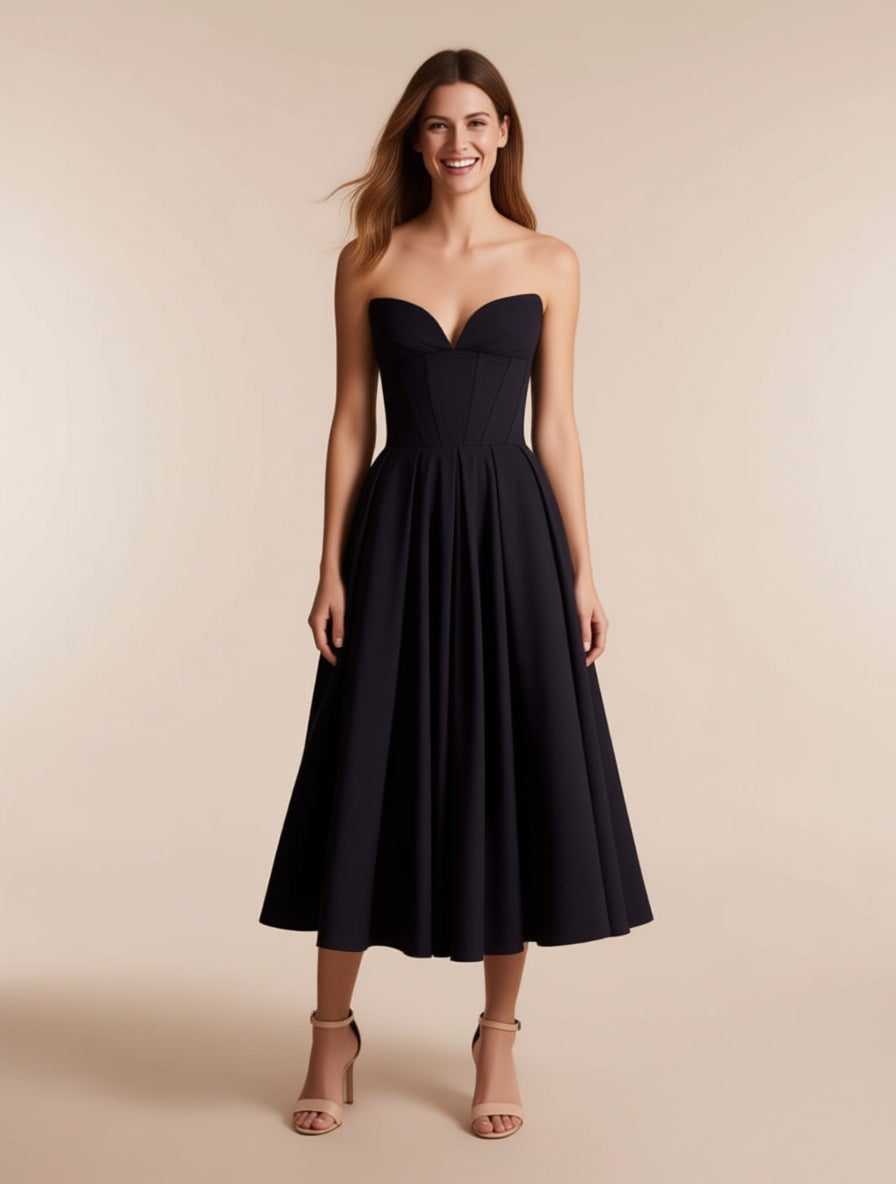
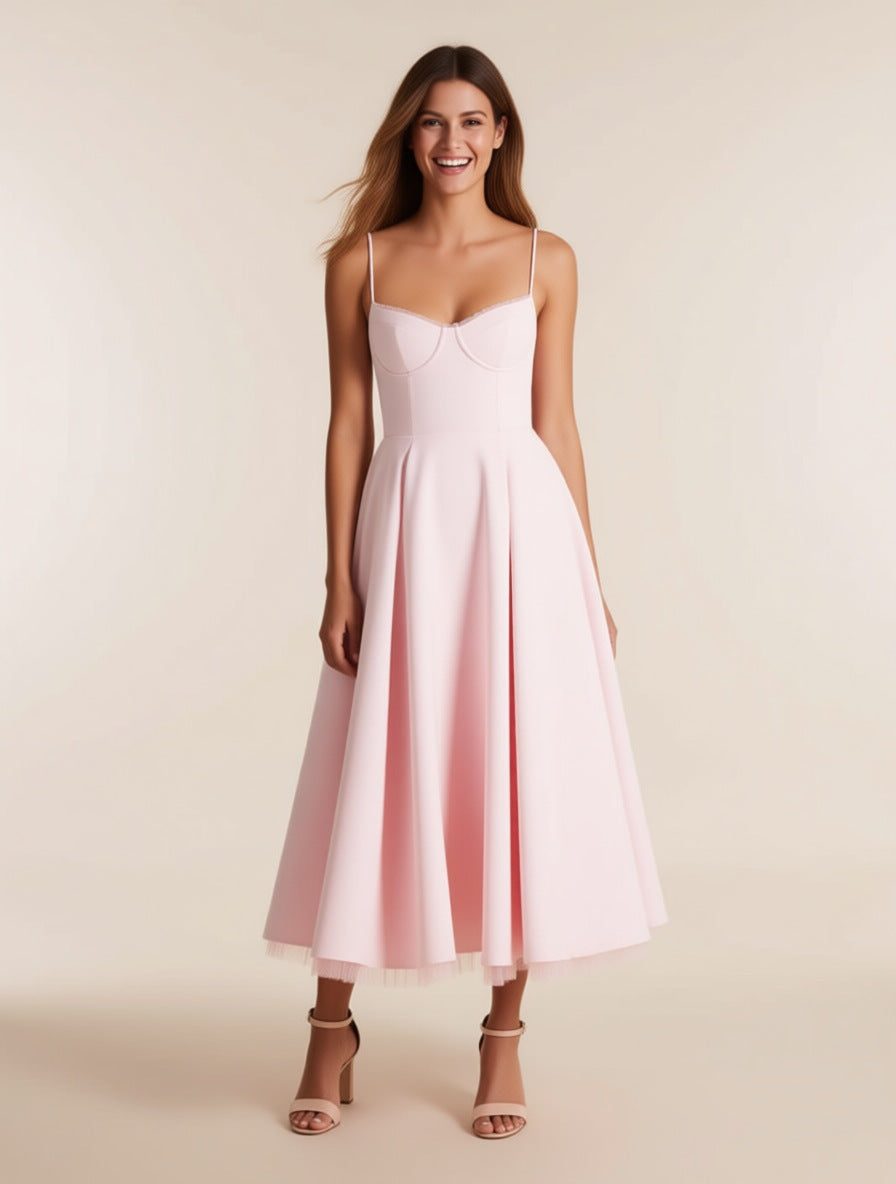
The working range is from the knee to mid-calf. A dress that ends at the knee, just below it, or at midi length is always correct. A mini can work at a party among friends, but it is a risk at a wedding or a work event, where it can read as a night out.
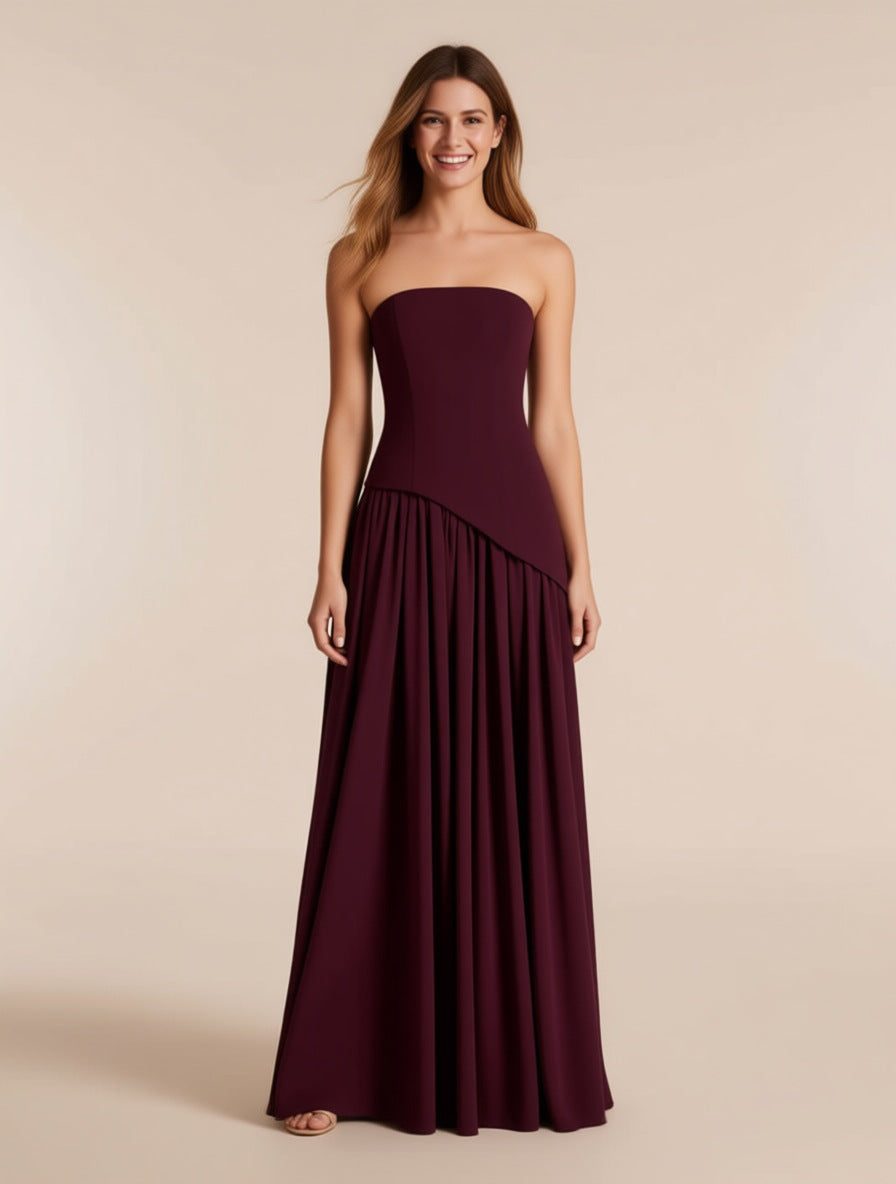
A long dress is not wrong, but choose the right kind. A floor-length column in satin looks like black tie and can leave you overdressed. A long skirt in a soft or printed fabric, or a maxi with a relaxed shape, sits comfortably inside cocktail, which is why the Emily Post list includes a long dressy skirt and top.
Fabric and finish
What makes a dress cocktail is less the shape than the fabric. Look for something with structure or a little sheen: satin, crepe, taffeta, lace, tulle, velvet in winter. A cotton jersey dress in exactly the same cut belongs to the daytime.
Finish matters just as much. A cocktail dress is meant to be accessorised, which is one of the oldest parts of its history. Heels or polished flats, a small bag, and jewellery chosen on purpose turn a simple dress into an outfit. The reverse is also true: an elaborate dress with a day bag and everyday shoes never quite arrives.
Colour and print
Almost anything goes. Black is the classic and the little black dress was more or less invented for this hour of the day. Colour and print are just as correct, and at a daytime or summer event they usually look better than black. The only fixed rule applies to weddings: no white, ivory or cream.
Trousers and separates
Dressy separates are named in the Emily Post list, so there is no doubt that they count. A silk blouse with wide-leg trousers, a tailored evening suit, or a jumpsuit in a formal fabric all work. The test is the same as for a dress: evening fabric, deliberate accessories, nothing you would wear to the office unchanged.
Debrett's offers a practical version for events that start straight after work. Wear a smart dress under a fitted jacket during the day, then take the jacket off in the evening, change into higher heels and add a few bold accessories.
Cocktail compared with the dress codes around it
One step up is formal, or black tie optional, where a long dress becomes the best answer and a cocktail dress is the minimum. One step down is dressy casual, where the fabric can relax and a skirt with a dressy top is enough. Festive attire is cocktail with seasonal colour or sparkle added.
If an invitation says semi-formal, treat it as cocktail. If it says cocktail for a wedding after six in the evening, lean towards the dressier end: a darker colour, a longer midi, a richer fabric. For an afternoon event, go lighter in both colour and fabric.
Common mistakes
The usual errors are dressing for a club, with a very short and very tight dress, or dressing for the office, in the suit or the plain shift you wore all day. The other common one is treating cocktail as casual and arriving in a cotton sundress and flat day sandals. When in doubt, check the fabric first and the length second.
A quick way to decide
Pick a dress between the knee and mid-calf in a fabric that would look out of place at breakfast. Add heels or smart flats, a small bag and one piece of jewellery that you chose rather than left on. Bring a jacket or wrap. That is cocktail attire, and it will be right at nine events out of ten.
| Element | Right for cocktail | Leave for another day | |
|---|---|---|---|
| Length | Knee-length to midi; a relaxed long skirt | Very short minis; a floor-length formal gown | |
| Fabric | Satin, crepe, lace, tulle, taffeta, velvet | Cotton jersey, denim, anything that looks like daywear | |
| Alternatives to a dress | Dressy separates, an evening suit, a formal jumpsuit | The suit you wore to the office, unchanged | |
| Shoes and bag | Heels or polished flats, a small bag | Day sandals, a large everyday bag | |
| Colour | Any colour or print, including black | White, ivory or cream at a wedding |
Shop the look